Tuesday, July 28, 2020

"Why are the poor sleepless?"

This question was asked on a social media platform, and I assure you, it was a relevant (if perhaps naive) question.

Many people discussed work hours, multiple jobs, STRESS, and other factors that cut into things before I got there. So I added this:

Think about every time you spend money to save time, all day, every day.

Maybe you drive instead of taking the bus. Maybe you buy your carrots pre-shredded instead of whole. Maybe you stop at the fancy grocery store that's on your way home, instead of going a little out of your way to hit up the local bargain market.

There are also bigger things. People who can hire a nanny don't have to drop their kids off at daycare. People might move closer to work, even though it's more expensive. One might hire a housekeeper, a gardener, a professional organizer. Pay someone else to do their taxes, wash their car, fix their broken furniture. (Or just buy new furniture.)

You know the saying, "Time is money"? It doesn't just mean that taking too long costs money to businesses. It's a fact of our lives that we exchange money for time routinely.

Unless we don't have the money. And there's no way to get any more time.

Saturday, June 15, 2019

Creation. Science.

At first, there was no First. It was the time before the Before. A singular infinite Moment, without beginning or end, past or future, light or darkness. It was All, and it was One.

With a bang, the Moment ended, the All became Many. The Many sorted into Others: Matter, and Energy. Dark, and Light. Proton, neutron, electron. Gravity, momentum, potential, kinesis.

The Many heard the call of Gravity, and began to form new Ones. Clouds spun about each other, pressing close, as though containing a memory of the All. The pressure grew. Hydrogen became Helium became all that comes after. These clouds became the Stars.

The Stars then collected, spinning about each other again, seeking and perpetually missing the inescapable darkness at the center of the path. Some collections grew arms; others became disks, and still others formed neither structure. All of them simply Were, and some still Are.

As the Stars formed and grew and built new atoms, they flung out Matter with their immense Energy. Matter fled, and yet was captured by Gravity, first of its star, and then of itself. The memory of All is repeated, as mass collects, and forms satellites. These satellites become comets, asteroids, and the Planets.

Planetary matter churns, cools, finds bonds between atoms to form molecules. The right amount of Hydrogen with the right amount of Oxygen becomes the miracle of Water. The right temperature keeps Water liquid, and it absorbs Energy released by its Star.

Energy hits atoms and molecules on a Planet, exciting them. The complex rules by which they exist form organization between them to absorb and use this Energy. Systems develop, that become Cells. Cells absorb energy and convert it to movement, secretion, reproduction.

The Energy flood continues. Cells find other Cells, and again collect together, forming new Ones. Cells find themselves better at one thing or another; responding to light, converting starlight to molecules of stored energy, relocating the One to where it can become Many more quickly.

The Many Ones spread across the planet, finding a path for movement and growth in the great seas of liquid Water. They grow more complex, constantly absorbing the energy of the Star and converting it to Life. Cells specialize more, develop new systems. Systems develop to combine two Ones to create new combinations. The process is imperfect. The new Ones are not always like the old. Sometimes, the difference doesn’t matter. Sometimes it does, and spells Death. And sometimes, a difference comes that advances the path of Life.

A difference such as this spreads, until all the Ones that survive have it. Conditions change, differences that once made no difference now advance the path of Life. The Many Ones continue to spread, finding new conditions in new places, and changing over generations. The Tree of Life grows new branches.

Life reaches a point of complexity where different Ones find each other, and find greater survival together than apart. Symbiosis, Parasitism, Collaboration, Domestication. The Lives of the Many Ones find their path together, or separately. They coexist, or they outcompete. Change continues. Energy still pours from the Star, and complexity grows.

There arises an organism that is different. It does not only have reflex and instinct; it desires. It fears. It inquires. No longer must it wait for the long slow process of generational change to bring it new comforts and successes. Now it bends Matter to its will, forming it into clubs, blades, and arrows; clothes, tents, and dwellings; paints, charcoals, and engravings. It discovers new layers of need as it satisfies the old. It harnesses the power of plants, bending them to its will, helping them to grow even as it changes them to ones that can no longer grow without help. It harnesses the power of animals, teaching them to hunt differently and guard the People and their Possessions; teaching them to bear burdens and the People themselves.

Life serves but one purpose: to continue. And so it does, until a Change comes that spells Death.

Monday, March 19, 2018

Disabling the Facebook Platform

For some of us, it’s not a surprise that those cute Facebook quizzes that tell you which Hogwarts house your spirit animal belongs to are actually a data mining tool. But I guess most people didn’t really realize how much they were giving away.

But now this article is out... Revealed: 50 million Facebook profiles harvested for Cambridge Analytica in major data breach and now people are paying a little more attention.

Some memes have gone around about disabling the Facebook Platform option, which cuts you off from all of these access points in one fell swoop. But I do tech support sometimes. I know this stuff is hard for a lot of people. So I made an illustrated primer. Note: you can click on the pictures to see them bigger.

Step 1: Go into Settings.

First, click on the little triangle in the upper right, next to where your Notifications show up (circled in red with a number 1 next to it). Then in the menu that shows up, click on Settings (circled in red with a number 2 next to it).

Step 2: Select Apps.

Again, the red circle, this time at the lower left, is your target. Note that I obliterated my name and other select information from this screenshot. This is an example of being necessarily cagey with our private information.

Step 3: Edit your Apps, Websites, and Plugins Setting. 


This one’s easy... just click the red-circled Edit button. The blue circle indicates an area that may have MANY MANY things in it-- these are all the apps that are currently connected to your Facebook account and have access to your data. When we know better, we do better. There were a few in this section when I did this the first time, too.

Step 4: DISABLE PLATFORM.


There’s a huge explanation of all the wonderful stuff you will miss out on if you do this. It’s okay. You can create your own relationship with these websites. I got a lovely email from Kickstarter letting me know that I could visit their site to add a password and create an independent account. (It totally looked like a scam email.)

But I do appreciate how "Disable Platform" sounds like something Captain Jean-Luc Picard tells Worf to do during a hostile engagement.

You’re all done! Now you will get an error message telling you to enable Platform if you want to take the latest quiz to find out which Walking Dead character your breakfast is. But that's okay. We all know it’s Shane anyway. (Maybe. I don't watch The Walking Dead. I picked him out from the Wiki.)

Monday, January 29, 2018

The Social Security Heist: It's Worse Than You Thought

Had an epiphany today in a discussion about Social Security.

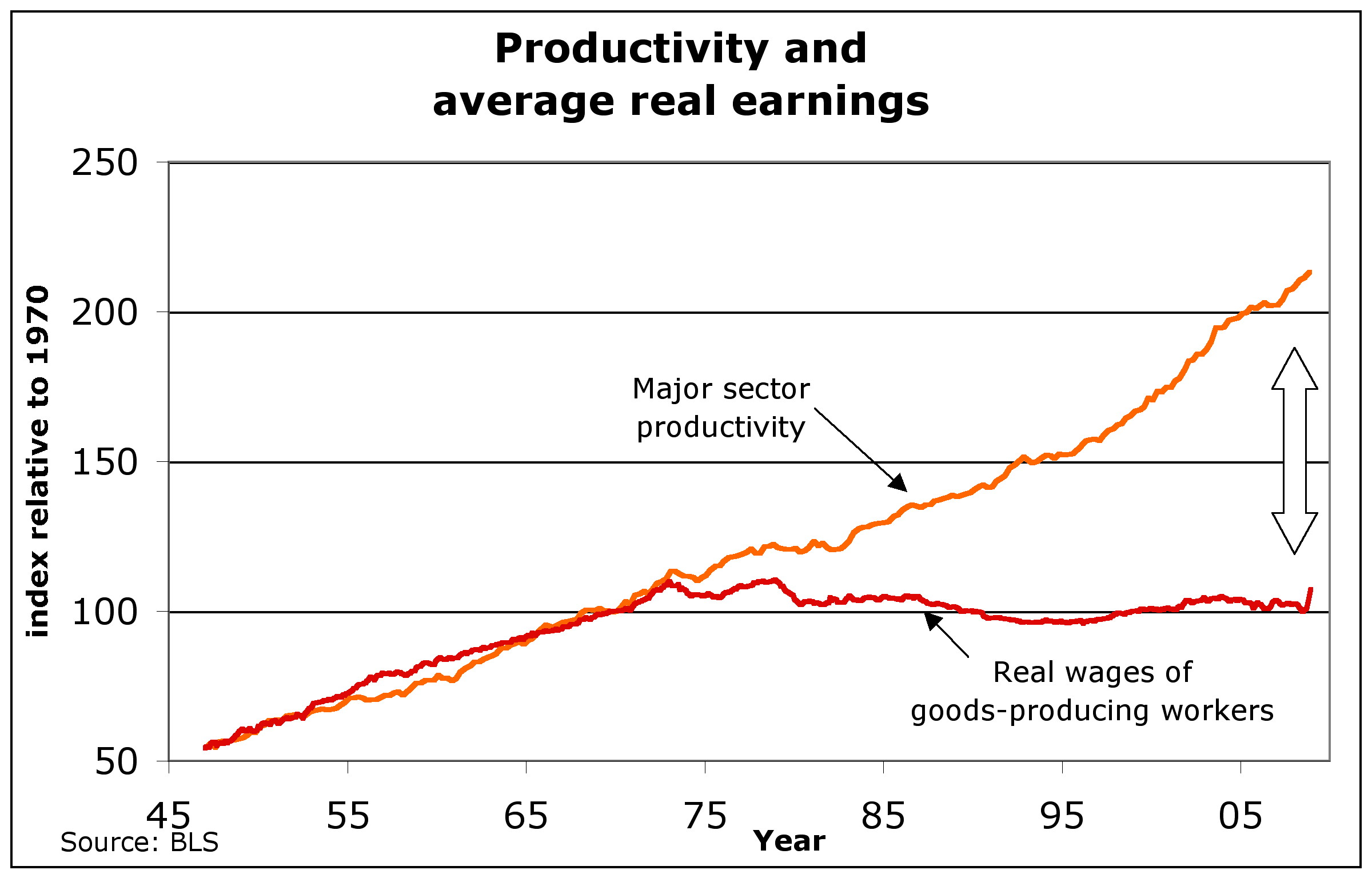
We are all familiar with this graph, right?

So somewhere around 1973 (probably caused by my birth), wages stagnated as productivity continued to climb. We all know where that money went: into the pockets of the folks at the top.

In 1973, the minimum wage was $1.60 per hour and the Social Security Maximum Taxable Earnings was $10,800 per year, or about $5.19 in hourly full-time equivalents-- exceeding the minimum wage by a factor of 3.2. Interestingly, the median individual income in 1974 (not sure why the Census table stops there) was $5,335, so the cap was at approximately twice the median. (The cap applies to individual income, not to household income.)

As income accrued to the higher end of the bracket, often not even as wages, but as capital gains, it was not taxed for Social Security. This has been going on for more than FORTY YEARS.

Consider, for a moment, that if over the last ~44 years, this money had been going into our pockets and taxed for Social Security at a rate ranging from 5.85% (in 1973) to 6.2% (now), how much more money would currently be in the trust fund.

This is money they stole from ALL OF US. Not just in our wages, but in our long-term security.

I thought I was already angry....

Wednesday, September 27, 2017

Yes, ALL White People. Even me.

You're not racist. And you want that recognized. Is that so wrong?

When I was in undergrad, an otherwise insufferable Sociology professor provided me with one of the most important experiences of my life. He wrote on the board before class instructions about where to sit in the room, based on our race/ethnicity. (A lot of people ended up sitting on the steps because they had a multiracial identity.) Then, he said, "Now let's talk about race."

I don't remember much of the conversation, but I remember one woman, who was Black, speaking up. Now, I'd had occasion to interact with her, and she seemed unfriendly as heck; I was quite put off by her. So I wasn't surprised (and was substantially indignant) when she said, "I expect white people to be racist."

But she went on.

"Because, in my experience, they usually are. And it saves me a lot of trouble and heartache to assume it from the outset, and let them prove they're not."

Oh. OH. That was important. 


And now here we are again, still. We are debating whether it's okay to talk about white people and our role in institutional racism. And some white people are getting mighty indignant. They are offended that one would characterize "white people" as racist. They want their feelings protected so they can safely engage. 

Going all #Notallwhitepeople about stuff like this is basically expecting black people to *keep* giving us a chance, no matter HOW many times they've been hurt and damaged... to never, ever develop any defense against the constant onslaught of microaggressions and macroaggressions, to turn the other cheek over and over, day after day, their entire lives.

It is, in fact, putting yourself above them, because they are black and you are white. Which we have a word for.

Wednesday, February 01, 2017

California: The Little Big Dog

When we met Moo, we thought she was 10 months old, and would top out at 45-50 lbs. This was about six months younger and 10 lbs. heavier than we'd intended, but once we met her, there was no question: this was (and is) our dog.

She'd had a kind of a tumultuous life up to that point. Rescued off the street at just three weeks, she was fostered out by the animal shelter, adopted by a family with not one, but two toddlers, and then re-fostered by a neighbor when they just couldn't keep up with a puppy. That neighbor worked at my mom's vet, so my mom saw the posting and knew we were looking to adopt a dog. The rest is Moo-story.

Perhaps because of that early life, or maybe it's just her personality, Moo is a paradoxically rambunctious but careful dog. We knew from her history that she was social with other big dogs, but didn't know about smaller ones. The first time we encountered a family with a couple of cocker spaniels out on a walk, we learned: she just ramped everything down. Her go-to move for small dogs was to roll over and let them conquer her. They've always been her best friends.

Presently, we examined her paperwork from the shelter more carefully, and learned she was SIX months, not 10, when we adopted her. She didn't stop at 50 lbs., or 60, or 65... her most recent weigh-in was 75.2 lbs. She is a BIG DOG.

Except, she's not.

I've come to realize that she is absolutely sure she's a small dog. She's never tried to jump on our bed, or take food off the table. She will sit on the couch... but just with her back legs, forepaws on the floor. She will do the same with a person's lap if it's on the couch. And when our little dog, a Shibahuahua weighing in at a scrappy 11.6 lbs., decides to lie down in the middle of Moo's crate, she just looks at us all sad, like, "Where do I go now? There's no more room for me. She took it all." It's not even in her repertoire to kick the dog that is literally 15% of her size out of her own crate.

Deep down, she just doesn't believe that she is the size she is, that she has the strength she does.

As a California native, I'm proud of our progressive environmental regulations and our diversity and inclusiveness and our thriving industries. I'm proud of being a world destination, and love showing off Los Angeles to anyone who visits me. I'd be proud of our awesome weather, but I guess that'd be a little weird, since no one does anything to make that happen.

But it baffles me that we seem to be a little big dog. Here we are, with an economy larger than France, with 12% of the US population, the two largest seaports in the country, and the busiest cargo airport in the country... but when someone gets in our crate, we just don't know what to DO about that.

It's time we realize how big we are, how strong we are, and how much we are worth... to the nation, and to the world. Only then do we have a shot at demonstrating that value to our allies or enemies. And that is what will let us stay strong, vibrant, and thriving.

Thursday, December 22, 2016

Hard Work

American culture tends to assume that people who have a lot—of money, power, stuff, whatever—work hard for it. Maybe they didn't at first; maybe they started off with an advantage... but they have to work to keep it and grow it. And that people who have little must be lazy.

This assumption has deep roots in the Puritan ethic that played a huge role in founding our country. The Calvinists who believed that their fates were predestined and completely unaffected by their actions still saw success and prosperity as signs of their favor from God. And, although their fate after death was already written, they did not seek to anger God by frivolous activities and self-adornment; their asceticism meant that their hard-won profits were re-invested in their livelihood.

But today, while we have shed that asceticism and instead revel in pursuit of worldly signs of wealth—nice cars, big houses, designer clothes, or even less conspicuous consumption such as constantly climate-controlled houses or lights on in every room—we retain the notion that affluence is a sign that you are favored by God. Even if we don't consciously understand it this way, we still implicitly assume that those who have, worked for it; those who lack, deserve it.

We've entered a Bizarro world where, not only do we assume that wealth requires hard work, we actually rate the hardness of work based on the wealth it generates. We think of “flipping burgers” as easy, even as we watch people sweating over fryers, running back and forth to fill orders, and taking flak from abusive customers with a smile on their face. We think, “I would never want to do that.” and yet, we consider it “easy.” We don't think it's easy because we have any reason to think the work itself is not hard to do, but merely because it is low pay. And then in a strange tautology, we think the work should be low-paid because it is so easy.

Consider how hard is the work of a megacorp CEO sitting at a desk larger than my son's bed, in an office larger than the typical American living room, with an en-suite bathroom and multiple assistants for various tasks? To be sure, CEOs do work hard. They often work 60+ hours a week, evenings, weekends, travel away from their family, manage meetings with very powerful people and millions of dollars on the line. Their work is stressful. But when they are taking home millions of dollars per year, how do we compare that to the “hardness” of their work?

On the other hand, consider a man who wakes at 4 a.m. to get ready for his first job. He showers quickly, dresses in worn but rugged clothes, and reports to a shuttle point by 5:30 to go to a far-flung construction site. By 7 a.m., he's doing heavy lifting and working with tools that can maim or kill if used incorrectly. As the sun rises in the sky he starts sweating. The dust kicks up and sticks to his brow. He gets a half hour for lunch, and an occasional bathroom break; he knows they're supposed to give him two 15-minute breaks on the clock, and he knows of union jobs where that happens, but he's never been able to get one. Here, he's an “independent contractor,” hired as a temp with no benefits, no paid time off, no job security. Keep your head down and don't complain; you're lucky to even have a job.

He comes home at 5:30, showers, grabs a bite to eat, and leaves for his evening retail job. If he's lucky, it's in a tipped establishment and he can smile and accommodate his way to more money. If he's unlucky, it's again temp work, seasonal, could end at any moment... and an inconsistent number of hours stocking shelves, ringing up customers, and trying not to take it personally when people yell at him for not being able to meet their every unreasonable demand.

Meanwhile, he barely sees his spouse and children. That's who he's doing this for: working 60+ hours a week at low wages, so that his spouse can work a more flexible job and sometimes show up for the kids' holiday programs and school open houses. But 80 hours a week doesn't cut it anymore for a family of four. If they are compensated for 50 weeks a year (because in jobs at this tier, you don't get vacation time, and sometimes don't even get sick time), at 80 hours a week, at an average of $10/hour (nearly 40% higher than the Federal minimum wage), after payroll taxes they've got about $3,000/month to pay rent (that's not enough income to get a mortgage), buy groceries, put gas in a car or buy a bus pass, pay utilities, buy clothing and school supplies, pay for after-school care, and handle any other expenses that come up – such as a $2,000 emergency room visit or a $4,000 blown head gasket in their 12-year-old car. Health insurance? Savings? Laughable—every dime is spent the second it comes in.

Who works “harder”? That's a ridiculous question; the work isn't remotely comparable. They both work hard. But does the CEO's vastly higher compensation actually cause him to “work harder”? At some point, does more money actually get more product?

Now we've elected a President who definitely “has.” His home glitters, his name illuminates skylines. He travels in the rarefied circles of world leaders and business magnates. He's famous for being rich, and rich for being famous. He can lose $916 million in one year—enough to give every Pennsylvanian in poverty $550—and just keep on chugging.

Does he know what it means to work hard?

Many of us assumed he did. We assumed that it has to be hard work to maintain that empire. But the more we get to know him, the more it seems that he doesn't ever actually do that work himself. Intelligence briefings are boring—go meet with Kanye. Let's take a phone call from Taiwan; it's too complicated to understand why that pisses off China. Rather than finding people with impeccable qualifications and distinction in the relevant field, let's just pick our friends and colleagues, or their spouses, to fill our Cabinet. It would be too much work to do otherwise.

We need to change our understanding of work, and hard work, and how it relates to assets. We need to remember that farm work is hard. Caring for children is hard. Preparing safe and appetizing food is hard. Stopping fires is hard. Chasing down criminals is hard. Cleaning offices is hard. Constructing new buildings is hard. Mining coal is hard. Managing a store is hard. We ALL work hard. We ALL deserve to be able to come home after 40 hours a week, know that there's enough food, that our housing situation is stable, and spend time with our children and partners free of stress and worry. This isn't a rural issue or an urban issue. It's not a white issue or a black issue. It's not a coastal issue or a plains issue. It's not a Boomer issue or a Millennial issue. It is a human issue.